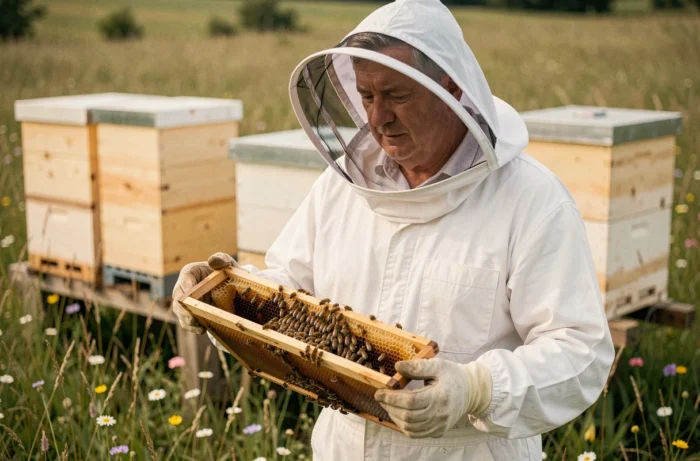
The health management of a beehive relies on technical decisions that most general public guides overlook. Between the parasitic pressure of Varroa destructor, new European regulatory requirements, and documented competition between domestic bees and wild pollinators, sustainable beekeeping is not just about placing hives in a flower-filled meadow.
Veterinary Shortage and Health Diagnosis in Beekeeping
A beehive without competent veterinary oversight is a risky beehive. This observation is shared by beekeeping sectors in several countries: too few veterinarians master the diagnosis of pathologies specific to bee colonies.
A recent program launched at the University of Georgia aims to fill this gap by training practitioners in parasitic diagnostics, identifying brood diseases, and clinical management of colonies. The focus is on Varroa destructor, a parasite whose management is crucial for the winter survival of the majority of hives in temperate climates.
For beekeepers, this shortage has direct consequences: delayed diagnosis of foulbrood, reliance on inappropriate treatments, difficulty obtaining prescriptions within timelines compatible with the colony’s biological cycle. We observe that beekeeping structures that pool a trained veterinary reference achieve significantly lower winter loss rates.
Actors committed to transmitting these practices document their methods and field feedback, as can be seen on https://www.hommesetabeilles.fr/, which combines training, colony monitoring, and the promotion of hive products.
European Health Certificate 2026: What Changes for Imported Honey
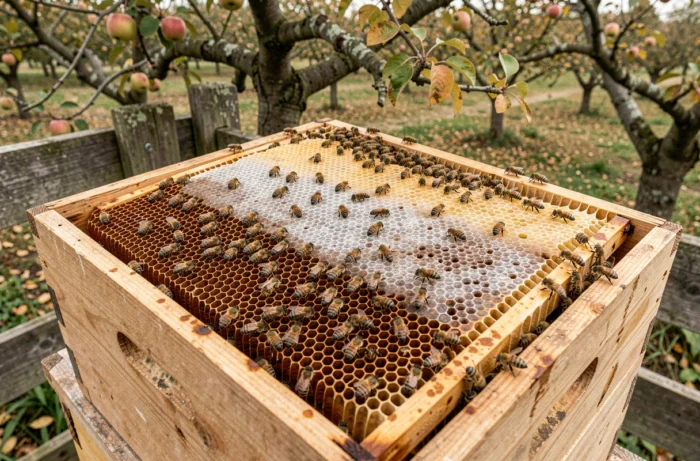
The European regulations on imported apicultural products tightened in 2026. Starting from August 30, 2026, the EU health certificate for honey and edible apicultural products includes a certificate prohibiting the use of antimicrobials for growth promotion or yield gain. This update, documented by the Australian government (note MAA 2026-06), affects all exporting countries to the EU.
For the French beekeeping sector, this evolution has two concrete implications:
- Imported honeys that relied on intensive farming practices using antimicrobials will lose access to the European market, reducing an unfair competition source for local beekeepers.
- European beekeepers who export must document the complete absence of these substances in their production chain, reinforcing the traceability required by buyers.
- Accredited analysis laboratories will see their workload increase, with certification timelines potentially extending during harvest periods.
This regulatory tightening is part of a broader movement. The French updates in 2026 on phytosanitary and biocide products, summarized by Staphyt, confirm a gradual tightening of the molecules authorized near beehives.
Competition Between Domestic Bees and Wild Pollinators: A Blind Spot in Urban Beekeeping
Installing hives in the city has become an act perceived as virtuous. The ecological reality is more nuanced. In Leeds, a beekeeper operating hives on rooftops was alerted by the Bumblebee Conservation Trust: in certain urban contexts, domestic bees are in direct competition with wild pollinators for the available floral resources.
Two mechanisms are documented. First, food competition: a colony of domestic bees exploits a considerable volume of nectar and pollen within a foraging radius that, in a dense urban environment, often covers the entirety of the floral resources accessible to bumblebees and solitary bees.
Second, pathogen transmission: contacts between species on the same flowers facilitate the transfer of infectious agents. Wild pollinators, lacking the health monitoring that managed hives benefit from, are more vulnerable to these cross-contaminations.
We recommend urban beekeepers assess the floral carrying capacity of their environment before establishing new colonies. A sustainable urban beehive requires a reasonable ratio between the number of hives and the area of foraging resources within a three-kilometer radius.
Sustainable Beekeeping Practices: Beyond the Label, Technical Actions
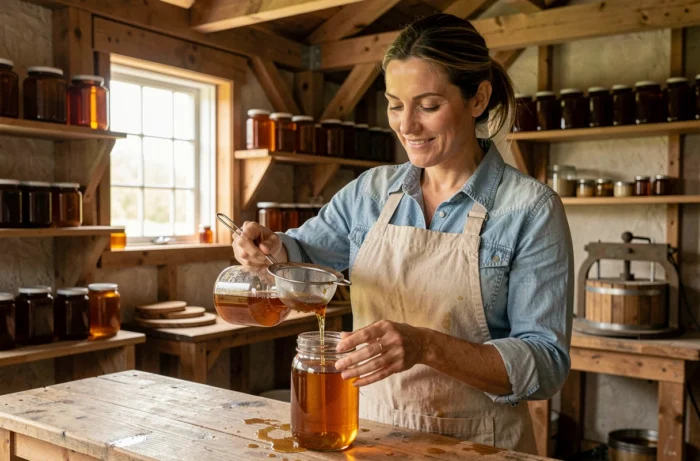
Sustainable beekeeping is not decreed by a label. It is built colony by colony, season after season, through precise technical choices.
Varroa Management Without Chemical Escalation
The treatment of varroa remains the most critical health issue. Beekeepers engaged in sustainable practices prioritize integrated methods: removal of drone brood, brood cutting, oxalic acid through trickling or sublimation during broodless periods. The alternation of molecules used limits the development of resistance in the parasite.
Genetic Selection and Local Adaptation
Working with bee strains adapted to the local climate and flora reduces dependence on inputs. Selection programs focusing on hygienic behavior (the ability of workers to detect and eliminate infested brood) yield measurable results on the resilience of colonies.
The importation of queens from distant regions introduces unsuitable genotypes and fragments local populations. We recommend sourcing queens from breeders who work on regional ecotypes.
Reasoned Honey Harvesting
Leaving colonies with sufficient reserves for wintering is a fundamental principle. An overly aggressive harvest, motivated by short-term yield, weakens colonies and increases winter mortality. A sustainable beekeeper harvests what the colony can spare without compromising its survival.
The strengthened European regulatory framework in 2026, the awareness of the limits of unregulated urban beekeeping, and the gradual structuring of veterinary training outline a landscape where sustainability is no longer just a discourse, but a set of operational constraints. Beekeepers who integrate these parameters into their daily practice are the ones whose hives will survive the coming decades.