
A buyer often makes a decision within the first few minutes of a visit. What sways their impression is not the major renovations, but a series of details that allow them to envision themselves in the space. Enhancing your property before sale relies on targeted choices, not an unlimited budget. It is essential to know where to focus your efforts so that every euro spent translates into the selling price.
Energy audit and DPE: the invisible filter that sets the price
Before even thinking about decoration or paint, a regulatory point can significantly drop the value of your property. Since April 1, 2023, any seller of a single-family home classified F or G on the DPE must provide a regulatory energy audit. This requirement will extend to homes classified E on January 1, 2025, and homes classified D will be affected on January 1, 2034.
The audit must be provided from the first visit and propose at least two renovation scenarios to reach class B. It is valid for five years. In practice, a poor DPE directs the negotiation downward even before the buyer has stepped through the door.
A detail often overlooked: condominium apartments are not subject to this audit requirement, even if classified F or G. If you are selling an apartment, the DPE remains necessary, but the regulatory audit does not apply. For a house, however, anticipating a favorable audit can prevent a significant depreciation.
As detailed by Coupefile Immobilier’s advice, preparing your property also involves a good understanding of these obligations before putting it on the market.

Targeted renovations before sale: where to invest to avoid losing money
You may have noticed that some houses sell in just a few weeks while others stagnate for months? The difference rarely lies in the size or location. It hinges on the perceived condition of the property during the visit.
Improvements that yield more than they cost
Not all renovations are equal. Some offer an almost immediate return on the selling price, while others are absorbed without any visible effect on the buyer.
- Refreshing the paint in neutral tones transforms the atmosphere of a home for a modest budget. A bright yellow or burgundy wall reduces the buyer’s ability to envision themselves in the space.
- Replacing damaged flooring in living areas (laminate, cracked tiles) removes a frequent negotiation point during visits.
- Repairing visible minor defects (blackened bathroom grout, broken handles, yellowed switches) sends a signal of regular maintenance. A buyer who spots several micro-defects imagines more serious hidden problems.
- Improving attic insulation or replacing single glazing with double glazing can improve the DPE rating by one or two letters, changing the property’s perception in the market.
Renovations to avoid before selling
Completely renovating a high-end kitchen or installing a pool just before selling rarely results in a price increase equivalent to the investment. The buyer does not value your personal tastes at the same level as you do. It is better to have a clean and functional property than one renovated according to your own aesthetic criteria.
The basic rule: only undertake renovations whose cost remains significantly lower than the depreciation they help avoid during negotiations.
First impression during the visit: what the buyer sees in 90 seconds
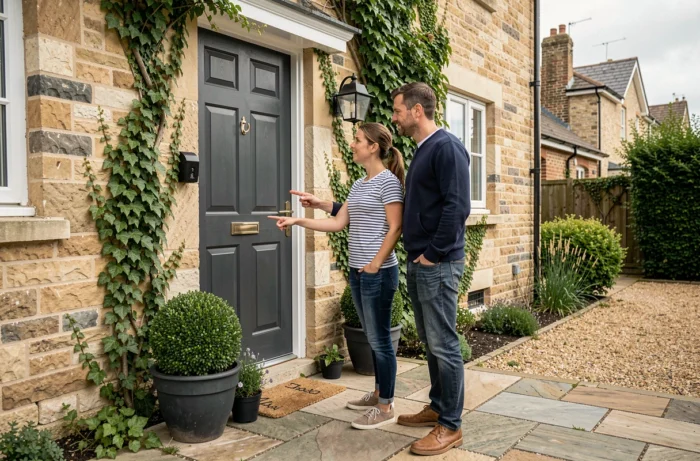
The estimation made by a buyer begins even before entering the property. The exterior, the entrance, the smell upon opening the door: these elements form an almost instantaneous judgment.
A neglected exterior lowers the perceived selling price, even if the interior is impeccable. Mowing the lawn, cleaning the facade with a pressure washer, repainting a rusty gate: these simple actions disproportionately alter the first impression relative to their cost.
Inside, light plays a central role. Open all the shutters before each visit, replace burnt-out bulbs, and clear the windows of anything blocking natural light. A dark home appears smaller and less inviting.
Declutter without completely depersonalizing
Removing personal items (family photos, collections, posters) helps the buyer to envision themselves in the space. However, a completely empty and cold home has the opposite effect. A few neutral decorative elements are enough to make the space feel warm without imposing a style.
Also consider storage: an open and well-organized closet gives the impression of generous storage space. A closet stuffed to the brim suggests a lack of space.
Real estate listing and photos: the first selection filter
The majority of buyers eliminate a property in less than ten seconds on a real estate listing portal. The quality of the photos determines whether your home will be visited or ignored.
Photos taken during the day, with a wide-angle lens and a tidy interior, significantly increase the number of visit requests. Photographing a room backlit or with visible clutter is akin to sabotaging your own listing.
Some concrete principles for effective photos:
- Photograph each room from the angle that shows the most volume, usually from the entrance of the room.
- Turn on all the lights even during the day to eliminate shadowy areas.
- Tidy the kitchen and bathroom almost to a clinical standard: these two rooms are scrutinized first by buyers.
The listing text should mention the property’s concrete assets (energy class, exact area, exposure, proximity to transport) rather than vague adjectives. A buyer is looking for facts, not superlatives.
Preparing to sell a property means accepting to look at it through the eyes of a buyer who knows neither its history nor its memories. Every detail corrected before the sale is one less negotiation point for the buyer and one more price lever for the seller.