
A barometer published in the summer of 2026 by L’Écho touristique reveals that destinations long considered secondary (Albania, Montenegro, Finland, Mauritius) are showing strong growth in sales, while classics like the United States or Mexico are experiencing significant declines.
Emerging destinations in 2026: what travel agency sales reveal
Inspirational content continues to promote the same circuits in Peru, Iceland, or Japan. Booking data paints a different picture. According to the Orchestra/L’Écho touristique barometer from July 2026, Albania and Montenegro are among the strongest growth areas from France.
This trend is not limited to Europe. Mauritius and the United Kingdom are also recording notable increases. Meanwhile, Saudi Arabia shows a marked increase in international arrivals, driven by a strategy of tourism openness and the organization of major events.
For those who wish to discover travel on Your Travel Guide, these market signals provide a useful framework before choosing the next departure.
Other countries are also making their mark: Morocco, Egypt, Brazil, and Colombia are among the destinations with the most significant growth in international arrivals. These countries share a common point: recent investments in tourism infrastructure and a political will to attract new types of travelers.
Nature travel and national parks: beyond the Grand Canyon
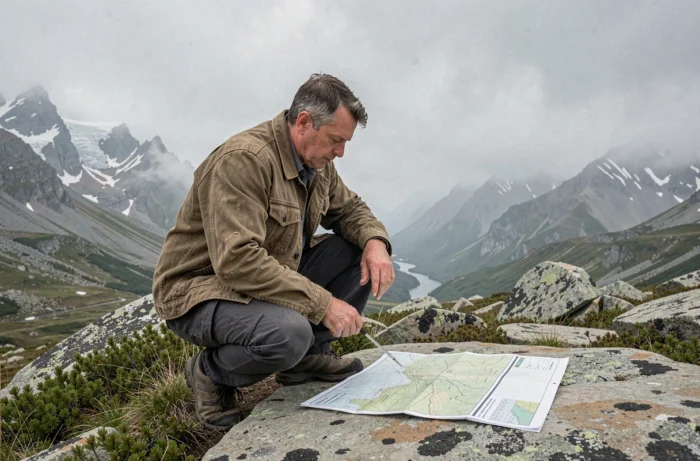
The Grand Canyon, Victoria Falls, the Northern Lights in Lapland: these nature destinations saturate the usual lists. Their attendance poses a concrete problem. Mandatory booking systems are multiplying in the most visited national parks, with slots sometimes fully booked months in advance.
Travelers seeking comparable landscapes without the crowd are turning to less documented alternatives. Southern Albania offers a preserved coastline between mountains and the Ionian Sea. Colombia combines rainforest, desert, and Caribbean coast within a relatively compact area. Finland, outside of touristy Lapland, offers accessible and less frequented national parks.
Criteria for evaluating an off-the-beaten-path nature destination
- Real accessibility from France: number of flight connections, total travel time, existence of seasonal direct links
- Level of infrastructure on-site: passable roads, available accommodations without long-term reservations, network coverage for navigation
- Local tourist pressure: ratio between the number of annual visitors and the site’s capacity, presence or absence of quotas
A little-frequented national park is not necessarily difficult to access. Finland, for example, has a network of marked trails and shelters open to all, even in its most remote areas.
Islands and beaches: why classic seaside destinations are losing ground
Data from the Orchestra/L’Écho touristique barometer shows that the Dominican Republic and Mexico are among the destinations experiencing the most significant declines in summer 2026 sales. This decline is not trivial.
Several factors converge. The cost of long-haul flights has increased significantly in recent years, making distant beach vacations less competitive compared to Mediterranean alternatives. Mauritius, Montenegro, or the Greek islands are capturing part of this redirected demand.
The profile of travelers is also evolving. Data from Euronews Voyages published in August 2026 highlights generational differences: Generation Z and millennials do not prioritize destinations in the same way. Thailand, Japan, or Australia divide these two groups, complicating tour operators’ strategies.

Emerging beach alternatives
- Albania: still under-exploited southern coast, significantly lower prices than neighboring Croatia, direct flights from several French cities
- Mauritius: marked growth in 2026 sales, high-end positioning but accessible outside peak season
- Montenegro: compact Adriatic coastline, UNESCO-listed heritage (Bay of Kotor), still moderate attendance
Emerging beach destinations share a common trait: they offer a favorable quality-price ratio and a reasonable flight duration from Western Europe.
Budget and seasonality: traveling better by shifting dates
According to an analysis by Expedia reported by Euronews in August 2026, traveling in the fall can be significantly cheaper than in the summer for several popular destinations. This differential is not limited to the price of the plane ticket: accommodations, activities, and restaurants often offer reduced rates outside peak season.
Morocco in October, Brazil in November, Finland in September: these windows offer acceptable weather conditions and reduced tourist pressure. Field returns vary on this point depending on the destinations, but the principle holds for the majority of rapidly growing countries.
Seasonality also influences the experience itself. Visiting a city or national park with attendance cut in half or by two-thirds changes the perception of the place. Lines disappear, interactions with locals become more spontaneous.
The rising destinations in 2026 are not those found on bucket lists that have remained unchanged for ten years. Sales data and institutional reports outline a rapidly changing travel map, driven by costs, seasonality, and national strategies for tourism openness. Comparing booking data to one’s own constraints (budget, flight duration, available period) allows for identifying destinations with a truly favorable quality-price ratio.