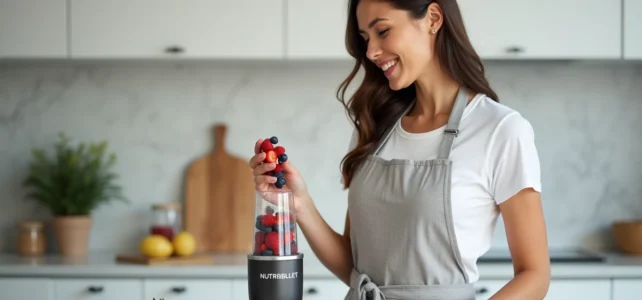
You just took a bag of frozen berries out of the freezer, you fill the Nutribullet cup, you start the cycle, and the motor stalls. The result is grainy, too thick, or completely blocked. The problem almost never comes from the frozen fruit itself, but from how you load the cup and the liquid you add (or don’t).
To use frozen fruit in a Nutribullet without stress, you just need to follow a few principles related to the solid/liquid ratio and the order of filling. These are simple gestures, but they completely change the texture of the smoothie and the lifespan of the device.
Frozen fruit load limit: protect the Nutribullet motor
The Nutribullet is a compact personal blender. Its motor is designed for semi-liquid mixtures, not for crushing a solid block of ice. The distinction matters: frozen fruit works very well, as long as you don’t turn the cup into an ice cube tray.
The manufacturer recommends limiting ice to one quarter of the total volume of the cup. This rule also applies to fruit taken directly from the freezer, especially if they form a compact block. A cup filled to the brim with frozen mango puts much more strain on the motor than a mixture where the fruit makes up half of the contents.
Why an excess of frozen fruit blocks blending
The blades of the Nutribullet spin at high speed, but they need liquid to create a vortex. Without this circular motion, the frozen chunks get stuck at the bottom or hit the walls without breaking apart. You then hear a dull noise, the motor overheats, and the final texture resembles grainy snow.
Have you noticed that the smoothie froths more when the liquid circulates well? That’s exactly the vortex in action. Remember this principle: liquid creates movement, frozen fruit provides cold and texture.
Liquid and frozen fruit ratio for a creamy smoothie
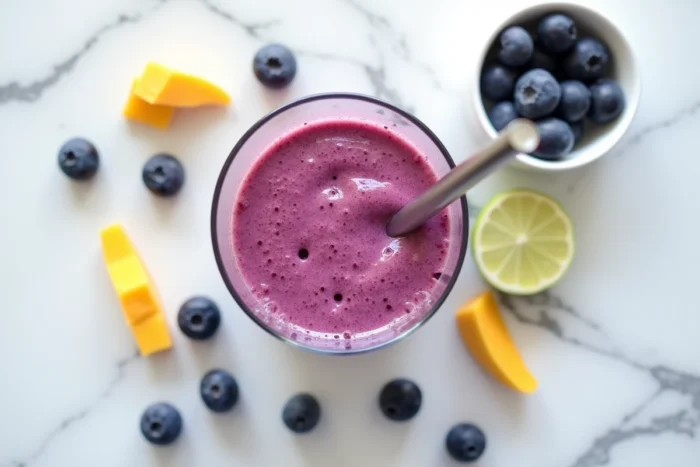
The liquid/solid dosage is the main lever. Too much liquid results in a diluted juice. Not enough, and the blender stalls. The ideal zone is between the “min” and “max” markers engraved on most Nutribullet cups.
Which liquid to choose with frozen fruit
A liquid that is already cold prevents the fruit from melting too quickly and diluting the smoothie. Almond milk, coconut milk, or simply very cold water work perfectly. A cooled herbal tea (ginger, mint) adds flavor without extra calories.
- Cold water or spring water: neutral option, lets the taste of the fruit dominate
- Almond milk or oat milk: adds creaminess and a slight natural sweetness
- Cold herbal tea (ginger, hibiscus): enhances the flavor profile without thickening
- Whole cow’s milk: provides the creamiest texture, but masks delicate flavors
Pour the liquid first into the cup, then add the frozen fruit on top. This simple tip ensures that the blades come into contact with the liquid right from the start.
Frozen banana, a natural thickener
Frozen banana blends easily and provides a thick consistency similar to a milkshake. It replaces ice cubes while naturally sweetening the smoothie. Cut it into slices before freezing: the pieces separate better than a whole banana frozen in a block.
Order of filling the Nutribullet cup
This point is often underestimated, but it makes a real difference in the duration of the blending cycle and the consistency of the result.
Here’s the order that works, from the bottom of the cup to the top:
- Cold liquid first, up to about one third of the cup
- Fresh or soft ingredients next (fresh banana, spinach, yogurt)
- Frozen fruit last, without packing down or exceeding the max marker
Why this order? The blades of the Nutribullet are attached to the lid, so when you turn the cup to screw it onto the base, the frozen fruit ends up directly against the blades. The liquid descends by gravity and feeds the vortex. The soft ingredients, sandwiched in between, blend effortlessly.
Adjusting the size of pieces for smooth blending
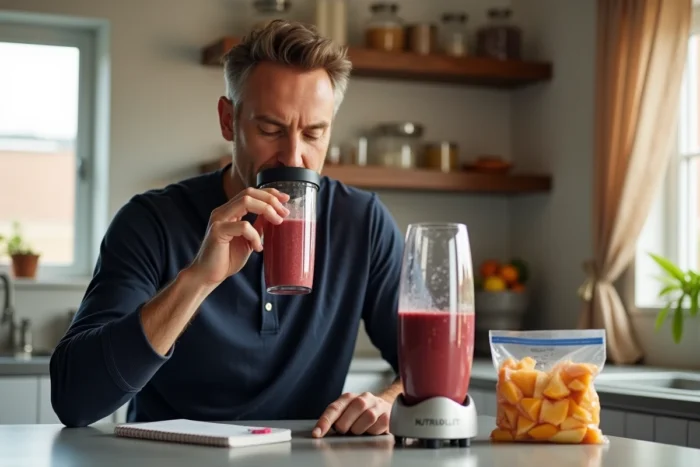
The frozen fruit sold in bags is generally cut into pieces suitable for a blender. Whole strawberries or large slices of mango pose more problems. If you freeze your own fruit, cut them into walnut-sized pieces before putting them in the freezer.
Fruits that blend easily and more demanding fruits
Berries (blueberries, raspberries, halved strawberries) are the simplest: small, they break apart in seconds. Frozen mango and pineapple require a bit more liquid. Pieces of peach or apricot, often larger in commercial bags, should be broken by hand before entering the cup.
A common trap: taking a bag out of the freezer and pouring the agglomerated contents directly. The fruits stuck together form a block that the Nutribullet cannot grab. Separate the pieces before filling the cup, even if it takes ten seconds.
Should you partially thaw the fruit?
Leaving the fruit at room temperature for five minutes is enough to slightly soften the surface. The core remains frozen, preserving the freshness of the smoothie, but the outer layer makes it easier for the blades to work. This compromise is particularly useful with hard fruits like whole strawberries or chunks of mango.
A successful smoothie in the Nutribullet relies on three things: a respected liquid-fruit ratio, a logical filling order, and reasonably sized pieces. The motor does the rest, as long as you don’t ask it to crush an iceberg. Start with simple recipes (banana, strawberries, almond milk) and adjust the proportions according to the texture you prefer.