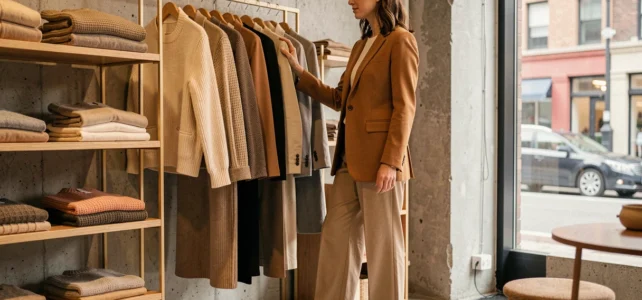
A fashion trend refers to a stylistic movement observed on the runways of Fashion Weeks, then filtered by buyers, media, and retailers before reaching the racks in stores. This filter determines what moves from the runway to the wardrobe, and this season it becomes more complicated with the implementation in France of a penalty aimed at ultra-ephemeral fashion.
Penalty on ultra-ephemeral fashion: what the regulation changes for style
Since September 2026, a decree published in the Official Journal imposes a penalty of up to half the price on products classified as ultra-ephemeral, with a ceiling set at 12 euros this year. This measure directly targets pieces with very rapid turnover, produced in massive volumes and sold at low cost.
For consumers, the consequence is tangible: some cheap pieces will cost significantly more. The reflex to buy a trendy top for a few euros to wear three times becomes less profitable. The regulation also requires displaying the manufacturing locations near the price on online interfaces, making traceability visible at the time of purchase.
This regulatory context encourages a different way of thinking. Instead of chasing every micro-trend, it becomes relevant to spot the new arrivals on the Lydie Tendances website to identify pieces that last several seasons without falling under the penalty.
Autumn-winter 2026 fashion trends: distinguishing the wearable from the spectacular
The autumn-winter 2026 shows produced dozens of stylistic directions. Not all will survive the transition to retail. Three movements stand out for their actual wearability and their recurring presence in several houses.

The return of structured women’s tailoring
The skirt suit is back with assertive shoulders and more fitted silhouettes. Several recent summaries of the shows converge towards a look described as “ladylike,” contrasting with the oversized volumes of previous seasons.
This is not an inaccessible runway piece. A structured blazer paired with a knee-length straight skirt works for both the office and evening events. The key lies in the cut: sharp shoulders, a slightly defined waist, and a fabric dense enough to hold its shape.
Checks as a common thread
Checks, tartans, and plaids are not a fleeting micro-trend this season. Analyses from late August 2026 describe checks as the dominant pattern on the runways, with a status of a common thread rather than a mere nostalgic nod.
In practice, a checked coat or a tartan scarf is enough to anchor an outfit in the season. The mistake would be to multiply prints: a single checked element per look avoids the costume effect.
Nubuck leather and tactile materials
Nubuck (suede leather with a velvety touch) appears in several collections as an alternative to classic smooth leather. This material provides visible texture without visual overload and pairs well with autumn hues.
A nubuck jacket or skirt is a more sustainable investment than a low-quality faux leather piece, especially in the context of the penalty on ephemeral products.
Seasonal colors: pistachio green and Dopamine Dressing
Two chromatic directions coexist this autumn-winter, and they almost oppose each other.
- Pistachio green establishes itself as a key shade: neither too bright nor too neutral, it works on knitwear, a bag, or trousers without disrupting a sober outfit.
- Dopamine Dressing, on the other hand, pushes towards bold and saturated colors designed to boost mood. Fuchsia, bright orange, or electric blue appear on isolated pieces (a sweater, a clutch) rather than entire looks.
- Classic warm tones (camel, burgundy, chocolate brown) remain a safe bet for structuring pieces like coats or suit trousers.
The most wearable approach is to build a neutral or warm base, then inject a single pop of bright color per outfit. Pistachio green precisely plays this bridging role between the two universes.
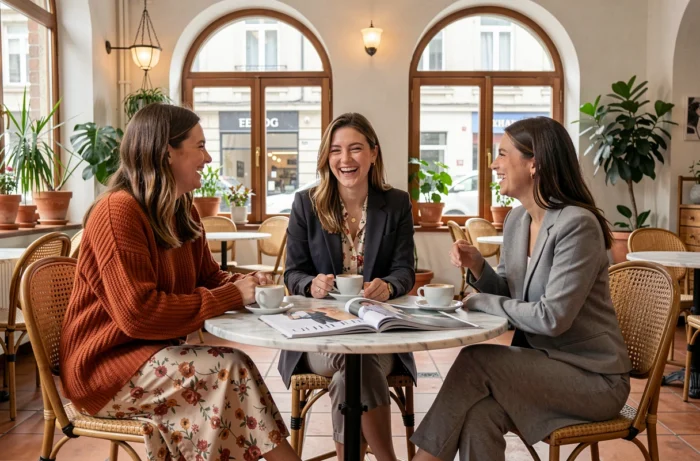
Runway trend or wearable trend: sorting criteria
Not all directions spotted on the runways deserve a purchase. Before giving in to a novelty, a few criteria can help separate the sustainable trend from the disposable fashion effect.
- Recurrence: a trend visible in three or more houses during Fashion Weeks is more likely to translate into actual offerings in stores. Structured tailoring and checks tick this box this season.
- Compatibility with the existing wardrobe: a trendy piece that only pairs with other trendy pieces ends up at the back of the closet. A structured blazer can be worn with jeans, suit trousers, or an existing skirt.
- Displayed traceability: with the obligation to indicate manufacturing locations online, it becomes easier to verify if a piece falls under ultra-ephemeral production subject to the penalty.
- Cost per use: a checked coat worn all winter is cheaper in use than a trendy top worn twice, even if the purchase price is higher.
The penalty ceiling will rise to nearly twenty euros in a few years, further widening the price gap between ephemeral pieces and clothing designed to last. Investing in solid materials and timeless cuts becomes an economic calculation, not just an aesthetic choice.
The autumn-winter 2026 trends reward this type of reasoning. Structured tailoring, checks, nubuck, and pistachio green share a common point: they are stylistic directions that work beyond a single season and are unlikely to end up taxed as disposable products.