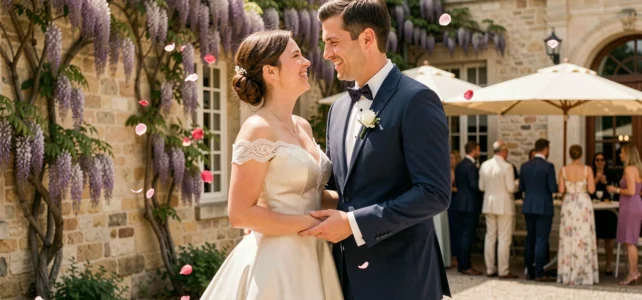
The average budget for a wedding in France is now around 20,000 euros. Over the past twenty years, the cost has nearly doubled, driven by inflation on raw materials and the visual standards imposed by social media. Organizing a wedding in 2024 therefore requires tighter budgetary decisions than before, on items that no longer carry the same weight in the overall envelope.
Wedding Budget 2024: Where the Money Really Goes
The catering budget now absorbs up to 40% of the total budget. This is a notable change compared to previous years, where decoration and venue captured the most visible share of expenses. The caterer has become the primary budget item, ahead of the venue and the dress.
Why this shift? Couples prioritize the experience of their guests. A mediocre meal in a sumptuous setting leaves a mixed memory. An excellent meal in a simple venue makes a stronger impression.
Flowers are also experiencing a constant increase. The prices of floral raw materials rise each season, prompting many couples to reduce the volume of arrangements or to turn to locally sourced seasonal flowers. To find suitable vendors in your area and compare offers, Le Monde du Mariage lists a wide range of professionals by category.
A concrete strategy that works: allocate half of the budget to the catering-drinks duo, a quarter to the reception venue, and distribute the rest among decoration, photo-video, and entertainment. This structure better reflects the actual priorities of the guests than the old equal distribution.
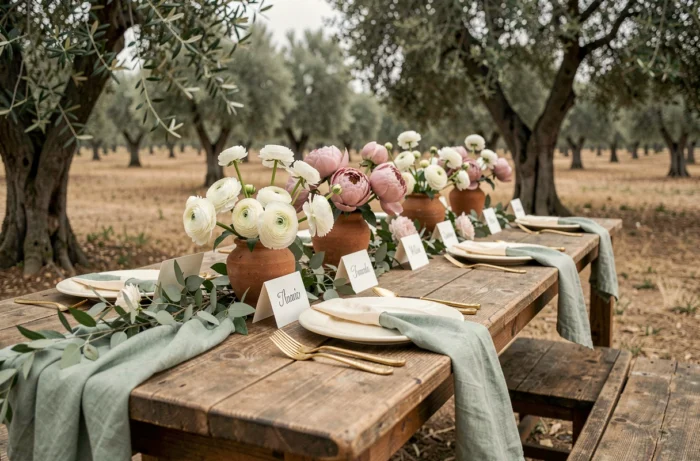
Shortened Planning: Organizing a Wedding in Less Than a Year
Did you think a wedding was planned two years in advance? Planning timelines are significantly shortening. More and more couples are finalizing their organization within a six to twelve month horizon, sometimes less.
This compression of the timeline changes the way vendors are chosen. Booking late requires more flexibility on the date and venue. A Saturday in June will be booked long in advance, but a Friday in September often remains available, with gentler rates.
Three Levers for Quick Organization
- Set the venue and caterer first, as these are the two most contested bookings. Everything else (photographer, DJ, florist) is organized around this date.
- Limit the number of vendors to coordinate. A reception venue that offers integrated catering eliminates one contact and simplifies logistics.
- Use an online wedding registry rather than a physical one. Management is immediate, guests contribute from their phones, and the couple tracks contributions in real-time.
This shortened approach is not a sign of haste. It reflects a rejection of over-planning, where every detail becomes a source of disproportionate stress.
Personalized Ceremony: What Replaces the Classic Protocol
The secular ceremony is no longer a curiosity. It is becoming the dominant format for couples who want to control the proceedings from A to Z. Personalizing the ceremony is the most structuring trend of 2024, far more than choosing a color or a decorative theme.
In practical terms, this involves vows written by the couple themselves, readings chosen by loved ones, or symbolic rituals (sand, wine, candle) that replace standardized formulas. The officiant does not necessarily have to be a professional: a close friend can take on this role, provided they prepare their intervention seriously.
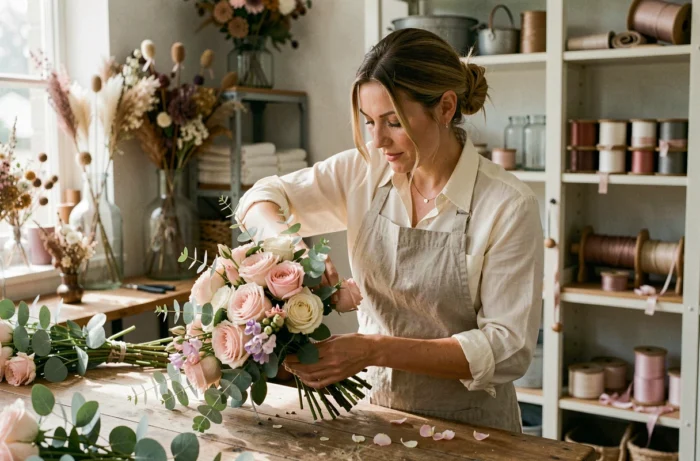
The location of the ceremony is also separate from the reception. Some couples hold the ceremony in a park or private courtyard, then move the guests to the meal venue. Separating the ceremony and reception allows for choosing two distinct atmospheres without compromise.
Eco-Responsible Wedding: Gestures That Have a Real Impact
The term “eco-responsible wedding” encompasses very variable realities. Between a couple that eliminates plastic balloons and another that chooses a zero-waste caterer, the effort is not the same.
The decisions that weigh most on the environmental footprint are rarely decorative:
- The choice of venue relative to the guests’ homes. A wedding two hours’ drive from most guests generates a considerable volume of travel. Bringing the venue closer reduces the impact more effectively than any decorative gesture.
- The volume of food ordered. Food waste at a wedding often exceeds what couples imagine. Asking the caterer for a precise adjustment per head, with redistribution of surplus to a local charity, makes a measurable difference.
- Electronic invitations. Custom paper printing, often in small batches, uses expensive inks and weights for an item that ends up in the trash. A well-designed digital invitation serves the same purpose.
The common pitfall is to multiply small visible gestures (bamboo straws, seed packets) while keeping the most polluting items intact. It is better to focus the effort on transportation and the meal.
Organizing a wedding in 2024 means accepting that the budget has changed structure and that the priorities of the guests have too. A generous meal, a ceremony that reflects the couple, and some thoughtful logistical choices matter more than spectacular decoration. The most successful weddings are not the most expensive, but those where every euro spent corresponds to a clear intention.