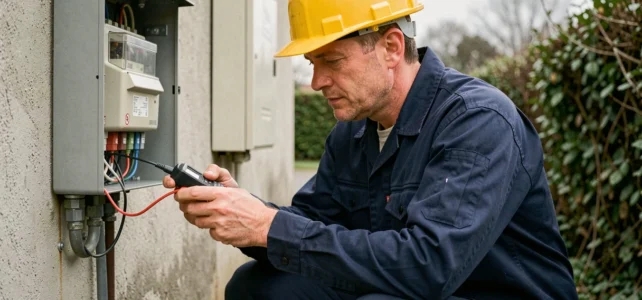
The electrical connection of a new home incurs highly variable costs depending on the terrain configuration and the required power. Between a plot that is already serviced and a site that requires network extension, the bill can multiply by four or five. Understanding the actual expense items allows for anticipating the budget without unpleasant surprises.
Electrical connection: pricing grid according to the terrain situation
The price of the connection primarily depends on the distance between the home and the existing distribution network. Enedis applies different rates depending on whether the land is serviced, partially serviced, or isolated.
| Terrain situation | Average price including tax | Comment |
|---|---|---|
| Serviced land (accessible box) | around €410 | Simple connection, no extension needed |
| Unserviced land | around €1,600 | Trenching work and cable installation included |
| Network extension needed | Beyond €2,000 | Amount varies depending on the length of extension |
These amounts concern an individual connection in low voltage under 36 kVA. As soon as the site requires the creation of a transformer station or a longer cable run, prices significantly exceed the usual ranges.
To refine your estimate, you can consult the cost of EDF connection according to iDéco Maison, which details budget items by project type.
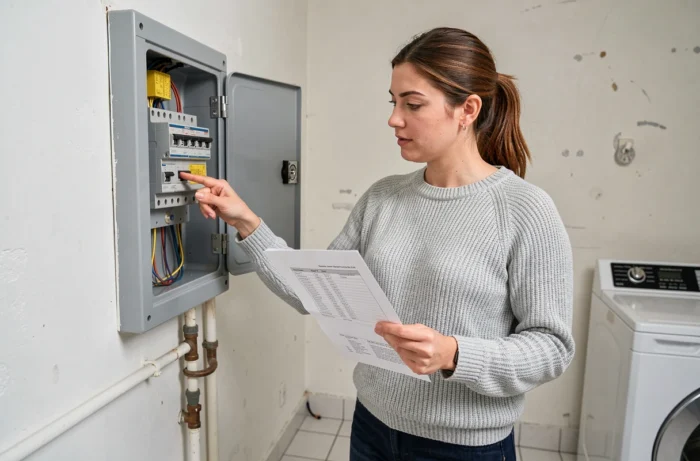
Subscribed power and single-phase or three-phase connection: the impact on price
The electrical power chosen for the home directly influences the sizing of the connection, and thus its cost. A connection sized for 6 kVA (small home without electric heating) does not use the same cables or equipment as a 36 kVA connection intended to power a heat pump and a charging station.
Single-phase or three-phase: which choice for which use
The single-phase connection is sufficient for the majority of individual homes. Three-phase becomes relevant when the home plans for high simultaneous power equipment, or when the distance between the meter and the electrical panel is long (beyond several dozen meters).
- A single-phase connection covers standard needs up to 12 kVA without notable extra cost on the connection
- A three-phase connection distributes the load over three phases, which reduces line losses but may require more expensive wiring on the interior installation side
- The addition of an electric vehicle charging station or a heat pump often pushes to size the connection beyond 12 kVA, which modifies Enedis’s technical proposal
Underestimating the necessary power forces a subsequent request for a connection modification, which incurs additional charges. It is better to anticipate the actual uses of the home right from the initial request.
Linky meter and commissioning: costs distinct from the connection
A common confusion is mixing the cost of the connection with that of the commissioning. These are two distinct operations, billed separately.
The installation of the Linky meter is free at Enedis. The network manager installs the communicating meter at no cost when connecting a new home. The commissioning fees, charged by the chosen electricity supplier, correspond to the activation of the delivery point.
First commissioning of a new home
For a new home, the procedure is called “first commissioning.” It differs from a simple meter opening in an existing home. The timeline and pricing differ: the first commissioning is longer and more expensive than a standard activation.
If the home is equipped with a Linky meter, activation can be done remotely, which reduces the timeline. With an old meter, a physical intervention is still necessary, with a higher fee for express requests.
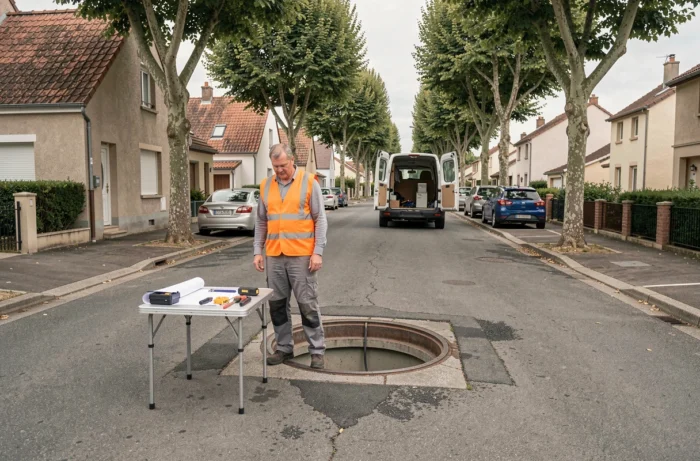
Electrical network extension: the budget item that quotes underestimate
When the distribution network does not pass near the plot, Enedis must carry out an extension. This scenario concerns plots in rural areas, parcels at the back of a subdivision, or constructions far from the public road.
The costs of network extension far exceed standard rates. The amount depends on the length of cable to be laid, the type of network (overhead or underground), and the potential need to create a high voltage/low voltage transformer station.
Several factors increase the bill:
- An underground layout costs more than an overhead line, but municipalities increasingly impose burying
- If the nearest low voltage network is saturated, Enedis may require the creation of a new departure from an existing station
- Road works (opening and restoring the roadway) are sometimes the responsibility of the applicant according to the agreement signed with the local authority
In these complex cases, Enedis’s financial proposal arrives after a technical study that can take several weeks. The total timeline, including the connection, then reaches four months or more.
Anticipating uses: charging station and heat pump in the calculation
New homes increasingly integrate energy-intensive equipment right from construction. An electric vehicle charging station alone consumes several kW. An air-water heat pump during extreme cold heavily demands the connection.
Planning for these uses right from the connection request avoids a subsequent modification of the connection, which involves a new intervention from Enedis and additional costs. A well-sized connection from the start is cheaper than two successive interventions.
The choice of power is made by adding the maximum simultaneous consumption of all planned equipment, including those that will be installed in the two or three years following construction. This calculation conditions the technical proposal and the quote sent by Enedis.
The difference between a connection at €410 and a project exceeding €2,000 lies in three parameters: the distance to the network, the required power, and the potential need for extension. Checking the servicing of the land before purchase remains the most cost-effective action to control this budget.