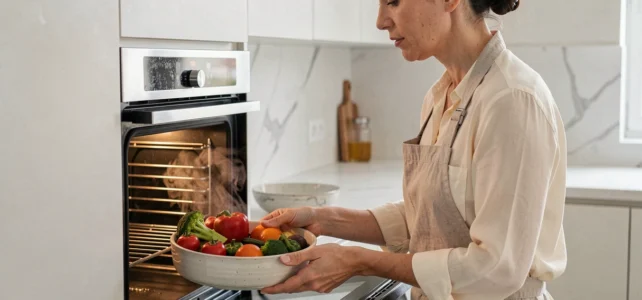
We’ve all opened the oven door after a steam cycle to find a puddle of water on the bottom and lukewarm vegetables bathing in their own condensation. Transitioning from traditional cooking (dry heat, simple visual cues) to true steam cooking in the oven requires changing a few habits. Steam does not forgive the same mistakes as convection, and combination ovens add their own traps.
Condensation, reservoir, and moisture overload: the mistakes of combination steam ovens
The first instinct when starting with a combination steam oven is to launch the steam mode as you would a traditional program. You fill the reservoir to the brim, put it in the oven, and wait. The result, often, is too much humidity in the chamber.
On a combination steam oven with an integrated reservoir, the reservoir does not automatically fill before each cooking session. You need to check the level, not fill it by default. Too much available water pushes the oven to inject more steam than necessary, especially on automatic programs.
Condensation at the end of the cycle is another point that no one monitors closely enough. When you open the door immediately after stopping, moisture settles on the walls, flows onto the bottom, and can even soak the dishes. The documented technique is to leave the oven door ajar for about twenty minutes after the cycle to expel this residual humidity. This simple gesture limits stagnant water and makes cleaning easier.
Once you master steam cooking in the oven, you quickly learn that managing water is as important as choosing the temperature.
Steam cooking vegetables: adjusting the temperature and time without drowning them
Vegetables represent the most common use case for steam in the oven. It’s often thought that steam is enough to cook everything evenly. In practice, each vegetable reacts differently to moisture and heat.
The trap of overloading the basket
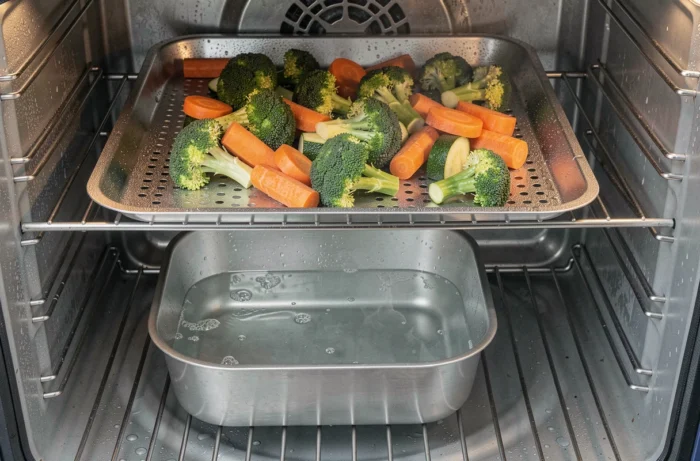
Piling too many ingredients on the rack or in the perforated dish blocks steam circulation. The vegetables at the bottom cook faster than those on top, resulting in a mix of textures – some tender, others still crunchy.
- Arrange the vegetables in a single layer, without overlapping, so that steam can circulate freely around each piece
- Group vegetables by similar cooking times: carrots and potatoes together, zucchini and green beans separately
- Cut pieces to a uniform size so that heat distributes evenly
The right temperature for steamed vegetables
Most steam ovens work well around 100 °C for vegetables. Going higher does not speed up cooking; it alters it. You lose crunchiness, colors fade, and the flavor dulls.
It’s better to cook for a shorter time and check the texture with the tip of a knife than to set a fixed time and rely on the timer. Feedback varies on this point depending on the oven models, but vigilance remains the best tool.
Combined steam for meat and fish: when humidity changes everything
Steam cooking in the oven is not limited to vegetables and light soups. It’s on meat and fish that combined steam (steam + convection heat) shows its true potential.
For poultry, the documented trick is to combine steam with convection heat to achieve crispy skin and tender meat. First, you launch a steam cycle to deeply hydrate the meat, then switch to dry convection heat to sear the outside. The result is a golden chicken outside, juicy inside, without constant basting.
For fish, steam alone is sufficient in most cases. A fish fillet steamed in the oven retains its delicate texture without drying out. The key is not to exceed the necessary time: a few minutes too long and the flesh falls apart.
Sourdough bread and pastries: controlling steam precisely
Sourdough bread in a steam oven is a special case. You are not looking for gentle and even cooking; you want a violent thermal shock with a precise peak of humidity at the moment of baking.
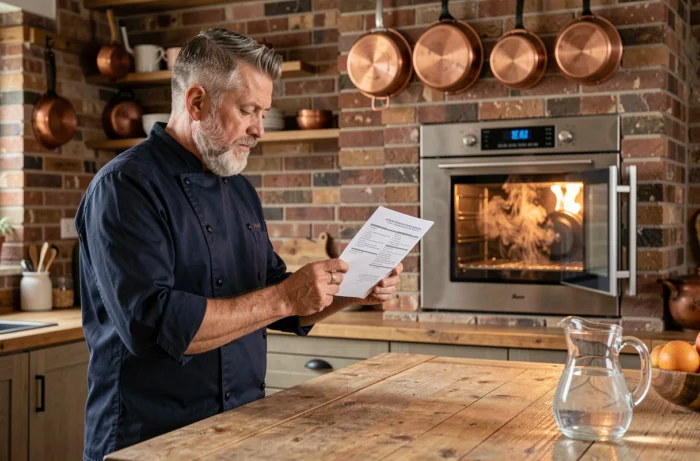
Field methods recommend preheating strongly and pouring boiling water onto a very hot tray at the moment of placing the bread in the oven. This injection of steam maximizes the oven spring and allows the crust to remain soft long enough for the bread to develop.
On a combination steam oven, the integrated steam mode can replace this action, but you need to ensure that the injection is intense enough in the first minutes. Some models release steam too gradually, which is insufficient for bread.
Cakes and pastries: steam sparingly
For cakes, steam is only useful at the beginning of the cooking process, while the batter rises. After that, humidity becomes an enemy: it prevents the crust from forming and leaves a soft top.
- Activate steam only during the first few minutes of cooking, then switch to dry mode
- Avoid opening the door during the rising phase to prevent temperature drop
- Monitor the reservoir: excess water in the chamber softens the surface of the cakes instead of browning it
Steam cooking in the oven transforms everyday recipes when you understand that each food requires a different moisture level. Vegetable dishes want a constant and gentle steam. Meat benefits from a sequence of steam followed by dry heat. Bread demands a brutal peak. And pastries tolerate only a touch at the beginning of the cycle. It is this control, much more than the temperature, that makes the difference between a successful dish and a soggy one.