
Less than half of adults meet the recommendations for physical activity, and the time spent sitting occupies a large part of the day outside of sleep. Integrating sports at home into an already busy daily routine filled with work and family obligations requires going beyond simple motivational advice. Several factors, from available equipment to actual time constraints, determine the feasibility of a home workout routine.
Home Sports and Unconventional Hours: An Underestimated Angle
Most guides on home workouts assume that sessions are scheduled in the morning before work or in the evening after the office. This pattern overlooks a significant portion of the workforce: shift workers, freelancers with variable schedules, and parents whose only free time is late at night.
The trend of night workouts in fitness centers is growing in France, driven by the search for calm and flexible hours. At home, this logic translates without opening hours constraints. A bodyweight strength training session at 11 PM doesn’t disturb anyone if the space is ready.
The real barrier is not the hour, but the ability to maintain a signal of regularity. Setting a recurring time slot, even an atypical one, creates a stronger anchor than searching for a free moment each day. Field reports vary on this point: some night practitioners report better sleep after a moderate session, while others observe the opposite effect with intense cardio. Adapting exercise intensity to the time remains a personal variable that is difficult to standardize.
To explore programs tailored to these unusual time slots, the Bougez Chez Vous website offers routines that can be adjusted based on available time and fitness level.
Home Fitness Equipment: What the Market Reveals About Practices
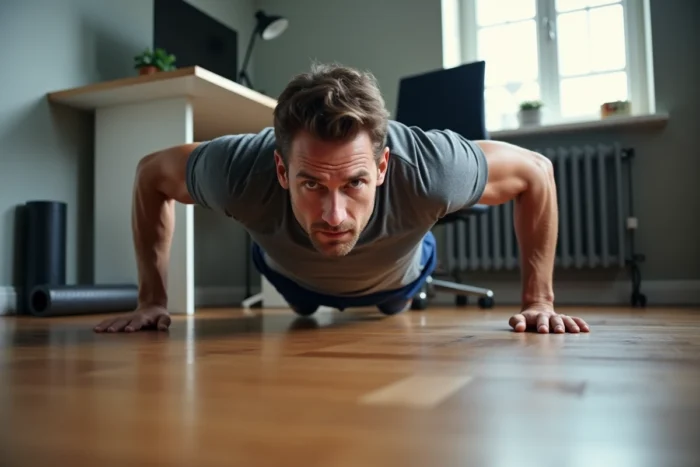
Recent sector analyses confirm that home and portable fitness equipment is particularly sought after. This trend goes beyond the post-lockdown effect: it reflects a lasting shift towards flexible training, with compact devices, connected equipment, and even rental systems.
This evolution has a direct consequence on how to integrate sports at home. Equipment is no longer a heavy investment reserved for enthusiasts. A few items are enough to cover the essentials of a home workout program:
- A floor mat and a pair of adjustable dumbbells allow for upper body (arms, shoulders, back) and lower body (weighted squats, lunges) workouts without cluttering a room
- A variable resistance elastic band replaces several fixed weights and can be stored in a drawer, making it suitable for small spaces
- A timer or a circuit training app structures exercises into blocks of a few minutes, avoiding sessions that stretch without progression
However, the abundance of options creates a trap: accumulating equipment does not guarantee consistency. A ready-to-use training space matters more than the quantity of accessories. If the setup requires ten minutes of preparation before each session, the likelihood of abandonment increases significantly.
Home Workout Routine: The Question of Minimum Effective Duration
Official recommendations mention a weekly volume of moderate to high-intensity physical activity. Translated into the daily life of a worker, this volume gets broken down. The concrete question becomes: what is the minimum duration of a home session for it to produce a measurable effect?
The available data do not allow for a universal threshold. Several parameters interfere: the actual intensity of the exercise, the initial fitness level, recovery between sessions. A twenty-minute strength training circuit with little rest between sets challenges the body more than an hour of low-intensity movements.
Structuring a Short but Dense Session
The format that often emerges from home practices combines cardio and strength training in alternation. Specifically, this results in work blocks followed by short breaks, repeated over a reduced total duration.
Three to four weekly sessions of twenty to thirty minutes constitute a realistic volume for a worker. This format avoids two pitfalls: the session that is too long and gets postponed, and the five-minute micro-workout whose effect remains negligible on overall fitness.
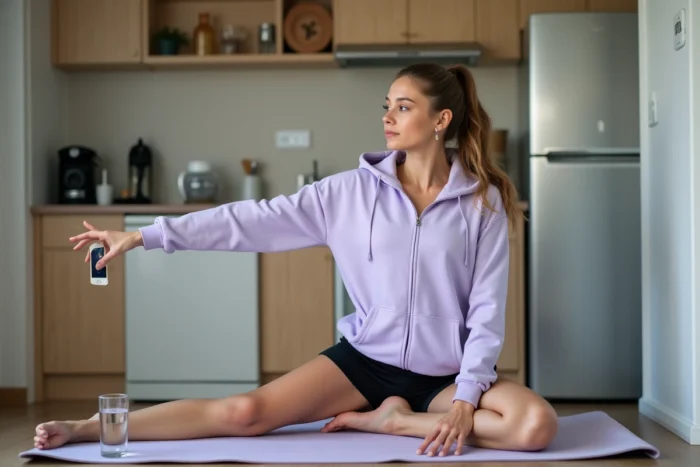
The choice of exercises is as important as the duration. Prioritizing compound movements (squats, push-ups, lunges, dynamic planks) engages multiple muscle groups simultaneously. A compound exercise recruits more muscle fibers than an isolation movement, optimizing the time spent.
Limitations of Home Sports for Complete Training
Presenting home sports as a universal solution would be reductive. Certain limitations deserve to be clearly stated.
Progression in load is capped without heavy equipment. An intermediate or advanced practitioner will reach a plateau where body weight and a few dumbbells are no longer sufficient to induce muscle adaptation. At this stage, the home environment becomes a supplement, not a substitute for a well-equipped gym.
Isolation is another factor. The absence of external feedback (coach, training partner) makes technical correction random. With movements like squats or deadlifts, repeated poor posture exposes one to joint injuries in the medium term.
- Motivation heavily depends on the environment: a space shared with an office or living room creates a mental association that hinders action
- Tracking progress remains approximate without measurement tools (heart rate, weight lifted, recovery time)
- Intense cardio sessions at home pose noise and vibration constraints, especially in apartments
These limitations do not invalidate home practice. They outline a realistic framework: home sports work as a foundation for regularity, particularly for those whose schedules do not allow for consistent attendance at a dedicated location. The hybrid approach, combining home sessions with occasional visits to a gym or outdoor spaces, remains the most sustainable in the long term.