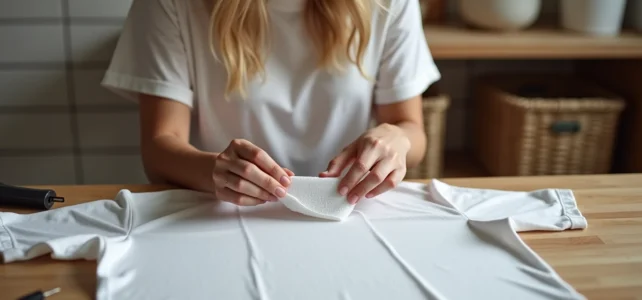
A flocking is a heat-pressed or directly printed pattern on a textile. Removing a flocking from a t-shirt primarily depends on the type of marking applied to the fabric. Letters and logos in heat transfer vinyl (vinyl or polyurethane applied hot) can be softened and then peeled off. In contrast, a screen print or direct print becomes one with the fibers, making mechanical or chemical removal risky for the textile.
Identify the type of marking before touching the t-shirt
The first thing to do is nothing spectacular: turn the garment inside out and observe the pattern. A heat transfer vinyl forms a slightly shiny and flexible layer on the surface, with clean edges that can sometimes be lifted with a fingernail. If the pattern seems integrated into the fibers, without relief or distinct edges, it is likely a direct print or a screen print.
This distinction changes everything. Heat or solvent-based methods work on a heat transfer vinyl because they soften the adhesive that bonds the vinyl to the fabric. On a direct print, these same techniques risk discoloring the textile without removing the pattern. Identifying the marking avoids wasting time and damaging a t-shirt for nothing.
Those who wish to delve deeper into the process can discover how to remove a flocking from a t-shirt by following a detailed protocol tailored to each type of marking.
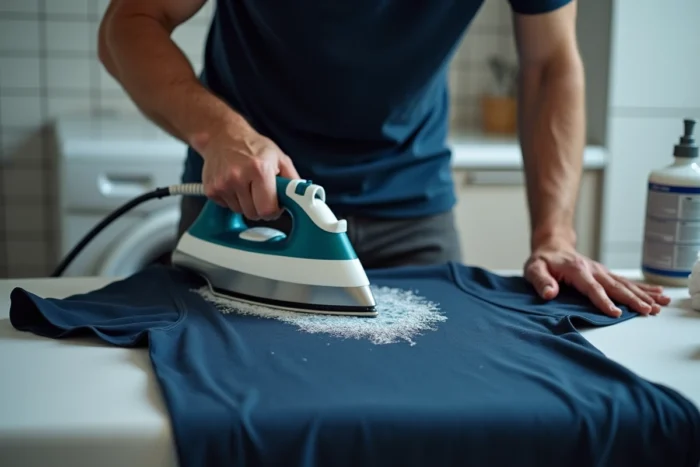
Removing heat transfer flocking with an iron: method and temperature
The iron remains the most accessible technique for removing a flocking in vinyl. The principle is simple: heat softens the thermoplastic adhesive, allowing the pattern to be peeled off by mechanical pulling.
Temperature setting suitable for the textile
For a cotton t-shirt, the iron can be set quite high without major risk. For a polyester t-shirt, professionals recommend staying between 120 and 160 °C, aiming for the lower end of this range. Polyester deforms quickly under heat, and a few extra seconds can leave an irreversible shiny mark.
Each application of heat should remain short, around ten to fifteen seconds per area. It is better to make multiple brief passes than to keep the iron in one place for too long.
Concrete steps for removal
- Place the t-shirt inside out on the ironing board, with the pattern facing a sheet of parchment paper or a thin cotton cloth that will serve as protection.
- Apply the hot iron to the area of the flocking for about ten seconds, then lift the iron and try to peel a corner of the pattern with a seam ripper or a flat spatula.
- Repeat the operation area by area, gradually peeling off the vinyl, without pulling sharply to avoid tearing the fabric fibers.
- Let the t-shirt cool for a few minutes between passes if the textile shows signs of stress (shiny appearance, odor).
The parchment paper serves a dual purpose: it prevents the softened vinyl from sticking to the soleplate of the iron and protects the fibers from direct contact with heat.
Solvents for removing adhesive residues from the textile
After the mechanical removal of the vinyl, a translucent film of adhesive often remains on the fabric. This residual layer gives a cardboard-like appearance and attracts dust. Two common solvents can dissolve it.
Heated white vinegar
Warm white vinegar softens thermoplastic adhesive residues without damaging most textiles. Soak a clean cloth, dab the sticky area, let it sit for a few minutes, then gently rub. White vinegar is the least risky option for natural fibers.
Acetone on stubborn areas
Acetone dissolves tougher adhesives, but it can also attack certain dyes and synthetic fibers. Before any application, test on an invisible area of the garment (inner hem, side seam). If the color does not change after a minute, apply acetone with a cotton swab to the adhesive residues.
Never pour acetone directly onto the t-shirt. Work with localized dabbing, while ventilating the room.

Cases where home removal is not realistic
Some flockings resist all domestic methods. This is the case for thick screen prints, industrial markings at high temperatures, and digital transfers directly integrated into the fibers. For these types of patterns, scraping or heating only wears down the fabric.
A flocking professional has heat presses set to the exact degree and industrial solvents suitable for each type of adhesive. The cost remains modest compared to the price of a garment damaged by a failed attempt. Some dry cleaners also offer this service, provided you specify that it is a flocking removal and not just a stain removal.
Another common case: the old t-shirt with cracking flocking. Pieces partially peel off, but the adhesive remains embedded. On a flocking that is flaking, heat accelerates the detachment of fragments, but cleaning the residues often requires a cold machine wash followed by a treatment with white vinegar.
The choice of method boils down to a practical question: if the pattern forms a distinct layer from the fabric, home removal is likely to work. If the pattern seems printed into the fiber, it is better to entrust the garment to a specialist or consider covering the area with a new flocking rather than forcing the removal.