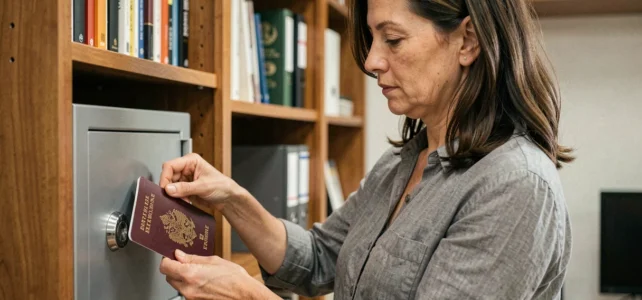
A passport left in a kitchen drawer or on an entryway shelf is exposed to two distinct threats: physical theft and identity theft. A malicious third party only needs a photo of the data page to commit fraud. Therefore, storing this document at home requires a minimum level of method, comparable to the protection of a payment method.
Passport and Identity Theft: The Overlooked Risk of Negligent Storage
Most of the advice available online focuses on protecting the passport while traveling. The domestic risk is rarely addressed, even though it constitutes a real vector for document fraud.
A prevention article published by Meilleurescpi reminds us that a passport should be protected “like a payment method.” A simple photocopy or a photo taken by a visitor, a tradesperson, or a roommate is enough to trigger an identity theft procedure. The recommendation is clear: never leave an identity document visible at home.
In practical terms, this means that placing your passport on a piece of furniture, slipping it into an entryway catch-all, or leaving it in the pocket of a coat hanging in a hallway exposes the document to uncontrolled access. The same precautions apply to the car: a passport forgotten in a glove compartment is an easy target during a break-in.
To keep your passport safe, the basic principle is to store it out of sight and out of immediate reach of anyone outside the household.
Home Safe or Locked Cabinet: Choosing the Right Storage
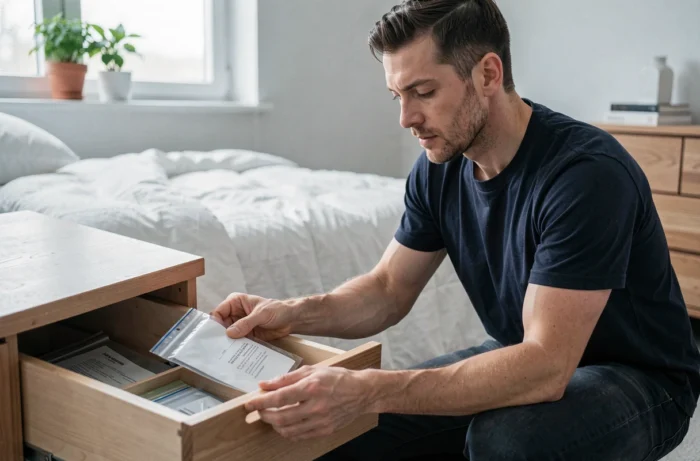
Not all closed storage options are equal. The choice depends on the level of protection sought and the other risks present in the home (fire, water damage).
Built-in Safe
A built-in safe fixed in a load-bearing wall or anchored to the floor offers the best resistance to theft. For a passport and a few documents, a compact model is sufficient.
The ideal location is in a room infrequently visited by guests: bedroom, office, dressing room. Fixing the safe behind a painting or in a closet reduces its visibility.
Locked Cabinet or Drawer
In the absence of a safe, a locked drawer in a sturdy piece of furniture is an acceptable alternative. It does not protect against a determined burglary, but it prevents opportunistic access during a visit or home intervention. The goal remains the same: to separate the passport from everyday items.
What to Avoid
- Decorative boxes or pouches placed on an open shelf, which attract attention without offering protection.
- The refrigerator or freezer, sometimes cited as a “clever hiding place,” but which expose the document to moisture and degradation of the booklet.
- A handbag or travel bag stored in a closet, as these containers are the first to be searched during a burglary.
Protection Against Moisture and Physical Degradation of the Passport
A biometric passport contains an RFID chip and printed pages sensitive to water, heat, and creases. Even well-stored, the document can deteriorate if the storage conditions are unsuitable.
A rigid waterproof pouch protects both the chip and the pages. Models made of hard plastic or leather with a zip closure keep the booklet flat and shielded from ambient moisture. This type of protection is particularly useful in rooms prone to condensation (basement, adjoining bathroom).
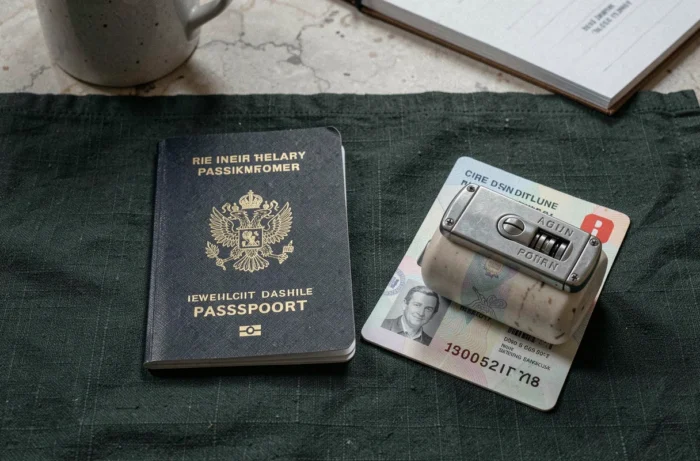
Some pouches incorporate RFID shielding that prevents contactless reading of the chip. This risk remains theoretical at home (a reader would need to be in immediate proximity), but the pouch has the advantage of centralizing physical and electronic protection in a single accessory.
For households exposed to fire risk, a fireproof safe or a fire-resistant pouch adds an extra layer of security.
Digital and Paper Copies: The Complementary Safety Net
Storing the original in a safe place does not exempt you from preparing usable copies in case of loss, theft, or destruction of the document.
- A paper photocopy of the data page (photo, number, validity dates), stored in a location distinct from the original, for example, with a trusted relative.
- A scan or high-resolution photo saved in a secure online storage space (encrypted cloud, digital safe).
- A copy accessible outside the phone, on a secondary medium (encrypted USB drive, dedicated email), as a stolen or dead phone makes the scan inaccessible when it would be most useful.
Digital copies complement the original but do not replace it. They serve to facilitate consular procedures or loss declarations, not to prove identity during a check.
One last often-overlooked point: note the expiration date of the passport in a digital reminder. An expired document stored in a safe remains an unusable document, and the renewal period can take several weeks depending on the time of year.